
You have spent weeks writing the copy, selecting the images, and checking the typos. The content is ready to go. Now you need to turn that digital file into a physical product that people want to pick up.
The way you bind a document, can change how people use it. A training manual needs to lay flat on a desk. An annual report needs to look prestigious on a boardroom table. A newsletter needs to be lightweight and cost-effective.
If you choose the wrong binding, the pages might fall out, or the book might snap shut while someone is trying to read it.
Here is a quick guide to the three main binding styles we use at Jennings Print and when you should use them.
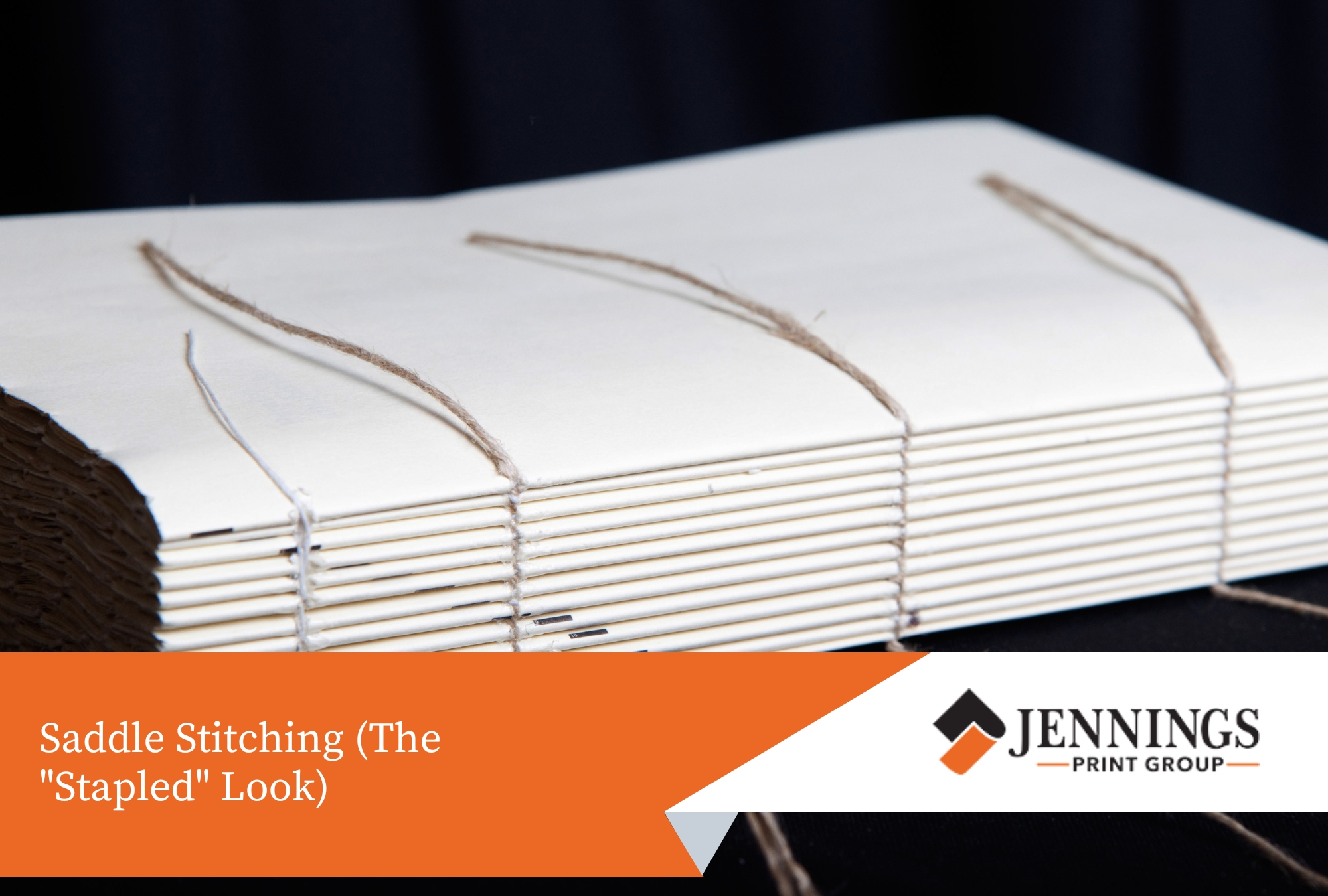
1. Saddle Stitching (The “Stapled” Look)
This is the most common and cost-effective method for smaller documents.
Saddle stitching is just printer talk for stapling. We fold the sheets in half and drive two wire staples through the spine. It is clean, simple, and fast to produce.
Best used for:
- Newsletters
- Product catalogues
- Event programs
- Brochures with 8 to 64 pages.
The technical catch:
Because we are folding sheets of paper in half to make the booklet, your page count must be a multiple of 4. If you have 10 pages of content, we will end up with 12 pages (including 2 blank ones). You need to plan your content length with this in mind.
2. Perfect Binding (The “Paperback” Look)
If you want your document to look like a real book, this is the way to go.
We use a strong, flexible thermal glue to attach the pages to a wrap-around cover. This creates a square spine. The biggest advantage here is that you can print on the spine itself. When the book is sitting on a shelf, people can still see the title.
Best used for:
- Annual reports
- Thick corporate profiles
- Magazines
- Books with 40+ pages.
The technical catch:
You need enough pages to create a spine. If the book is too thin (under 3mm or about 20 to 30 pages depending on paper stock), the glue won’t hold effectively, and you won’t have room for text on the spine. This option takes a little longer to produce than stapling, but the finish is worth it.
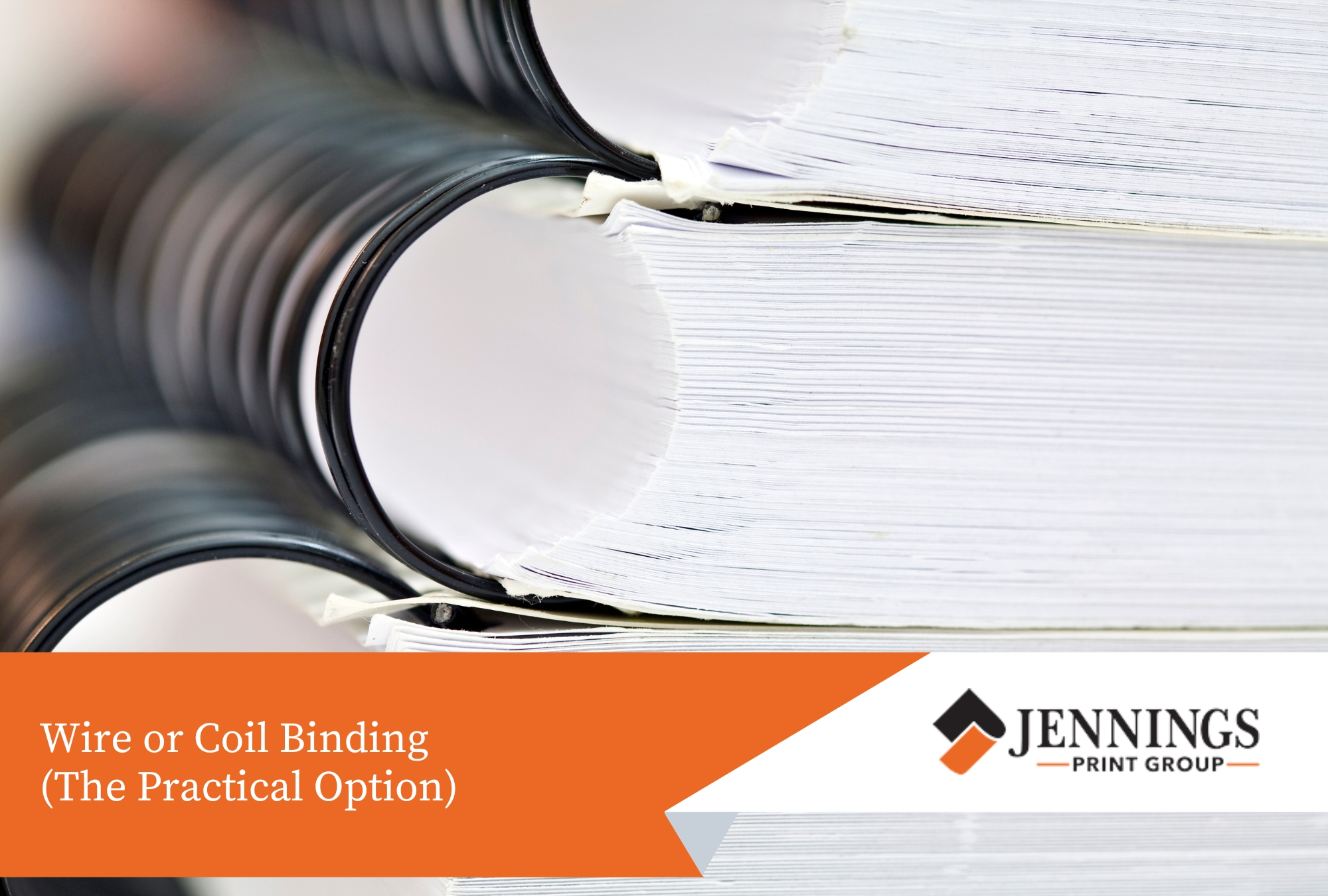
3. Wire or Coil Binding (The Practical Option)
Sometimes function matters more than form.
Wire binding involves punching holes along the edge of the document and threading a metal wire or plastic coil through them. It doesn’t look as “sleek” as perfect binding, but it has one massive advantage. It lays completely flat.
You can open a wire-bound document 360 degrees. You can fold the cover back behind the book. It stays open on a desk without you having to hold it down.
Best used for:
- Training manuals
- OH&S handbooks
- Recipe books
- Notebooks and journals
- Presentation documents.
Which one should you choose?
When you look at our range of booklets and brochures, the decision usually comes down to three things.
1. Page Count
If it is under 64 pages, saddle stitching is usually your best bet. If it is over 60 pages, saddle stitching starts to bulge open (we call this “creep”), so you should switch to perfect binding or wire.
2. Usage
Is this a read once document like a report? Go for perfect binding.
Is it a reference document that will be used daily in a workshop? Go for wire binding. It is durable and easy to handle.
3. Budget
Saddle stitching is generally the most economical. Perfect binding adds a premium look but costs a bit more. Wire binding sits in the middle but requires manual collating.
Need Advice on the Finish?
Paper weight and lamination also play a huge role in the final feel. A 300gsm cover with a matt laminate makes even a simple stapled booklet feel expensive.
If you are stuck on the specs, give us a call. We can look at your page count and budget to recommend the best fit.
Call Jennings Print on 02 4933 5735. We are based in Maitland and help businesses across the Hunter get their print looking professional.