
If you’re planning a bulk print run, one of the first decisions to make is whether offset or digital printing is the better fit. Both methods produce high quality results, but the right choice depends on quantity, turnaround time, paper stock, and how the material will be used.
At Jennings Print, we work with businesses across Newcastle and the Hunter every day to help them choose the most practical and cost effective printing option. This guide breaks down the differences so you can make a confident decision for your next bulk print job.
What Is Digital Printing?
Digital printing transfers your artwork directly from a digital file onto paper, without the use of printing plates. This keeps setup simple and allows jobs to move quickly from approval to print.
Digital printing is well suited to:
- Flyers and brochures
- Business cards
- Posters
- Short run marketing material
- Jobs with variable data such as names or numbering
Because setup time is minimal, digital printing is usually the most cost effective option for small to medium quantities.
What Is Offset Printing?
Offset printing uses plates and ink that transfer onto paper via a rubber blanket. While setup takes longer than digital printing, offset becomes very efficient once running.
Offset printing is commonly used for:
- High volume flyers
- Catalogues and magazines
- Stationery and letterheads
- Large scale marketing campaigns
For bulk runs, offset printing delivers consistent colour, sharp detail, and reliable results across thousands of copies.
How Quantity Affects Your Choice
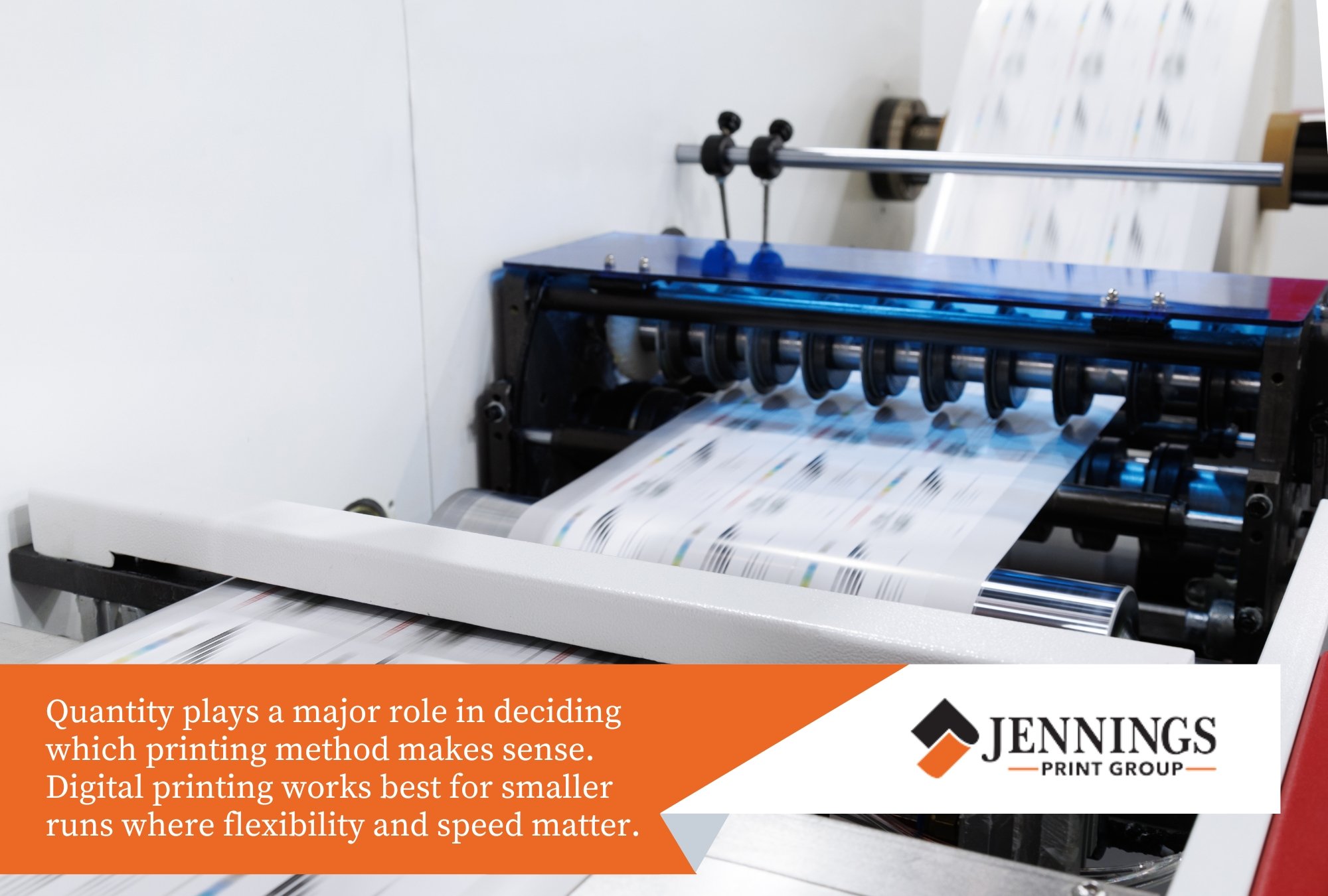
Quantity plays a major role in deciding which printing method makes sense. Digital printing works best for smaller runs where flexibility and speed matter. Offset printing becomes more economical as quantities increase, because the cost per unit drops once setup is complete.
Colour Consistency and Print Finish
If colour accuracy is critical to your brand, offset printing has an advantage. It provides strong colour consistency across long print runs, which is important for brand sensitive materials.
Digital printing still delivers excellent quality and is more than suitable for everyday business printing, especially when colour matching is not as critical.
Turnaround Time and Flexibility
Digital printing allows for faster turnaround and last minute changes, making it ideal for urgent jobs. Offset printing requires more preparation, so it suits projects that are planned and finalised ahead of time.
Paper Stock and Finishing Options
Offset printing supports a wider range of paper stocks and finishes, including thicker, textured, and specialty materials. Digital printing has improved significantly, but some paper types are still better suited to offset, particularly for bulk quantities.
Cost Considerations for Bulk Print Runs
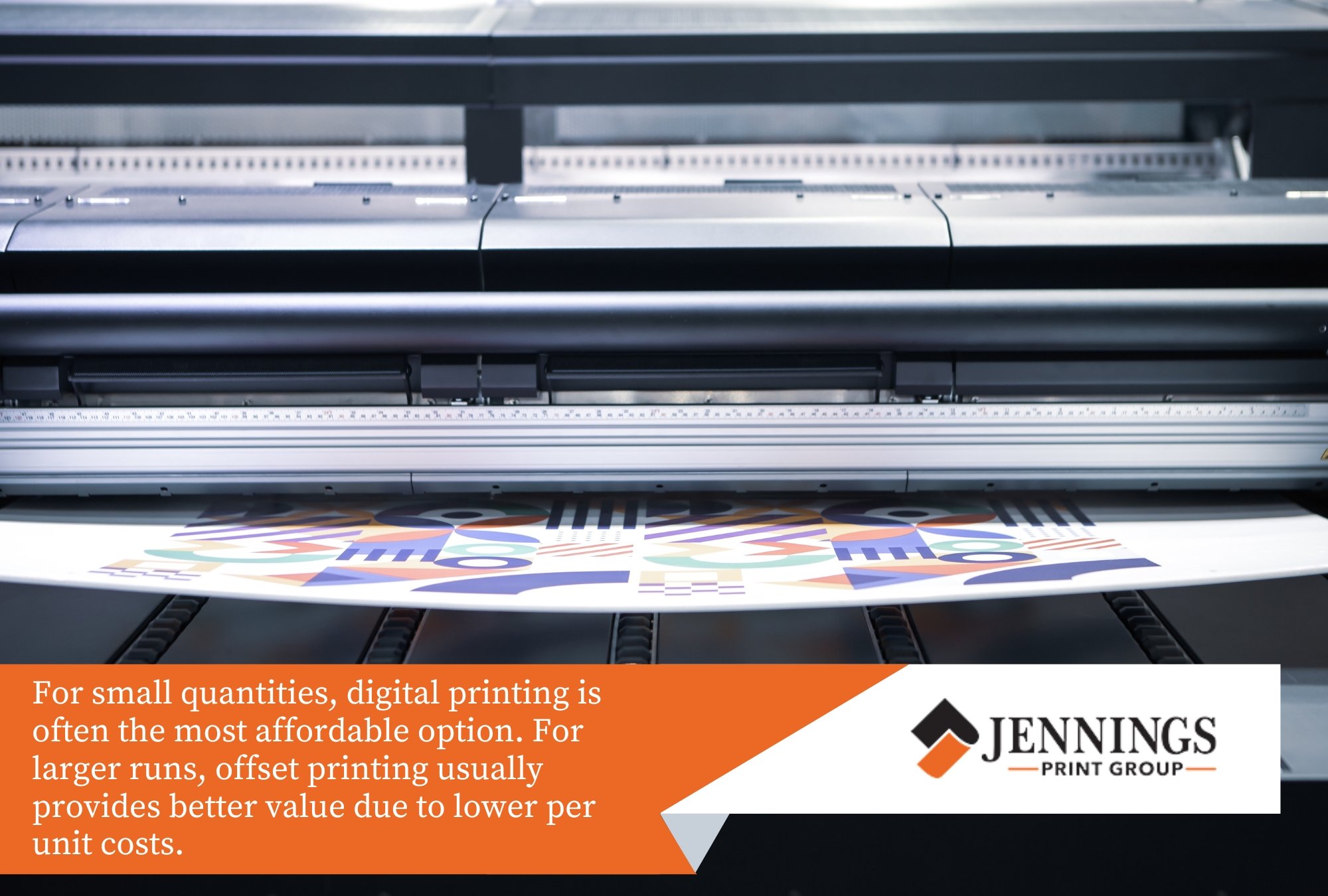
For small quantities, digital printing is often the most affordable option. For larger runs, offset printing usually provides better value due to lower per unit costs.
Which Printing Method Is Right for Your Job?
The best printing method depends on a few key factors:
- Quantity required
- Colour accuracy needs
- Paper stock and finish
- Turnaround time
- Whether content varies between copies
Get Expert Advice from Jennings Print
Choosing between offset and digital printing doesn’t need to be complicated. With the right advice, you can save time, control costs, and get a result that suits your business.
Jennings Print supports businesses across Newcastle, Lake Macquarie, and the Hunter with both digital and offset printing services. If you’re planning a bulk print run, contact our team to talk through your options and get clear advice before printing begins.