A safety sign that fails on a mine site isn’t a minor inconvenience. It’s a sign that can’t be read at the moment someone needed it, on a site where the consequences of missed information are genuinely serious. Mining and heavy industry environments are some of the harshest conditions a sign will ever face, and a lot of standard signage simply isn’t built for them.
Why Off-the-Shelf Signage Falls Short
Generic safety signs are designed for general commercial and light industrial use, office buildings, retail sites, standard warehouses. They’re tested and rated for conditions that are nowhere near what a mine site, processing plant, or remote heavy industry location actually delivers.
The gap shows up fast. A sign rated for general outdoor use might handle a suburban construction site for years. On a red dust haul road in the Pilbara, or a coastal processing site copping salt spray daily, the same sign can fade, crack, or delaminate within twelve months.
This matters beyond appearance. A faded warning sign, a cracked mandatory PPE notice, or peeling text on an emergency evacuation point is a sign that’s no longer doing its job. On a site where regulators conduct audits and where genuine hazards exist, a degraded sign is a liability, not just an eyesore.
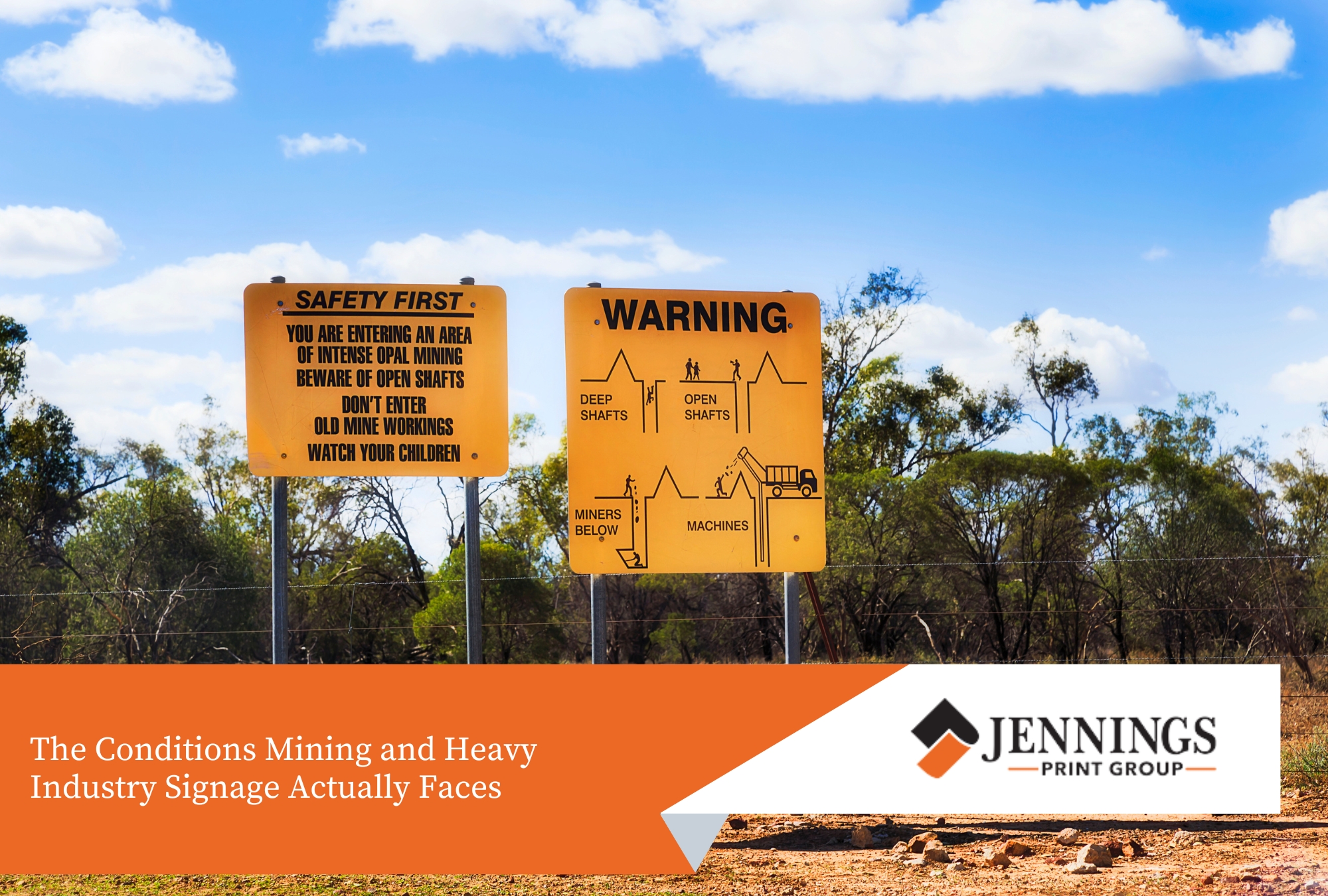
The Conditions Mining and Heavy Industry Signage Actually Faces
UV Exposure
Australia has some of the most intense UV exposure in the world, and remote mining regions often sit in the highest exposure zones. Standard printed signage will fade, chalk, and become brittle under sustained UV without the right protective measures.
Fit-for-purpose signage uses UV-stable inks and substrates rated for extended outdoor exposure, often combined with a laminate or overlaminate layer that absorbs UV before it reaches the printed surface. The difference in lifespan between a standard sign and a properly UV-rated sign on an exposed site can be the difference between two years and ten.
Dust and Abrasion
Haul roads, processing areas, and stockpile zones generate constant fine dust, and in some operations, abrasive particulate that physically wears down surfaces over time. Signage in these areas needs a surface that resists scratching and doesn’t degrade when repeatedly wiped or washed down to remain legible.
Substrates like aluminium composite panel and certain rigid polycarbonates hold up well here, particularly when paired with a scratch-resistant laminate finish. Soft or porous materials that might be fine in a clean indoor environment won’t survive sustained dust exposure.
Chemical and Corrosive Exposure
Processing plants, chemical storage areas, and certain mineral processing operations expose signage to corrosive agents, acidic runoff, processing chemicals, or simply a high-salinity coastal environment in some port and export facility locations.
Standard steel signage will corrode in these conditions, and standard adhesives and laminates can break down on contact with certain chemicals. Chemical-resistant substrates (often aluminium or specific grades of plastic) and appropriately rated adhesives and coatings are necessary where this kind of exposure is a factor.
Temperature Extremes
Remote sites in northern and central Australia experience extreme heat, with surface temperatures on metal signage reaching well beyond ambient air temperature in direct sun. Some operations also deal with the opposite problem, cold, high-altitude, or refrigerated environments where materials need to remain flexible and intact rather than becoming brittle.
Materials and adhesives need to be rated for the specific temperature range the sign will actually experience, not just general outdoor use. A sign that performs fine in a Sydney summer can fail in a way that wouldn’t happen in a more temperate climate.
Vibration and Physical Impact
Heavy vehicle movement, blasting operations, and general site activity create vibration that loosens poorly mounted signage over time. Sites also see genuine physical impact risk, a sign struck by mobile plant, debris, or simply heavy wind loading in an exposed location.
Mounting hardware and structural backing need to account for this. A sign that’s correctly printed but poorly mounted will fail regardless of how good the substrate and ink are.
Site-Specific Hazard Communication
Beyond material durability, mining and heavy industry sites have hazard communication needs that generic signage doesn’t address well.
Site-specific hazards need site-specific signs. A generic “Danger, Hazardous Area” sign tells a worker less than a sign that specifies exactly what the hazard is, “Caution: Reversing Vehicles, Haul Road Crossing” or “Restricted Area: Active Blast Zone, No Entry Without Authorisation.” Custom signage allows hazard communication to be precise to the actual risk present at that specific location, which is far more useful to someone making a real-time decision on site.
Multiple language and literacy considerations. Mining and heavy industry workforces are often multicultural, with workers from a range of language backgrounds and varying levels of English literacy. Pictogram-based signage, following recognised symbol standards, communicates hazards in a way that doesn’t rely solely on written English. Custom signage allows this to be designed in from the start rather than retrofitted.
Site layout changes need updateable signage. Mine sites and heavy industry operations change layout as work progresses, new haul roads open, processing areas are reconfigured, exclusion zones shift. A custom signage supplier who understands this can produce signage systems that are easier to update or replace section by section, rather than needing a full sign replacement every time the site layout changes.
Visibility and contrast for the actual viewing environment. Signs viewed from a moving vehicle, in bright glare, or against a dusty red-dirt background need different colour contrast and sizing considerations than signage designed for a clean office environment. Custom signage can be designed with the actual sightlines and viewing conditions of the site in mind, rather than using a generic template that may not perform well in the specific environment it’s installed in.
Compliance Still Matters
Durability and customisation don’t replace the need for signage to meet the relevant Australian Standards, AS 1319 for safety signs in the workplace, and where relevant, specific standards covering hazardous chemical signage, electrical hazard signage, and site-specific regulatory requirements under WHS legislation and state mining safety regulations.
A genuinely fit-for-purpose sign meets the compliance requirements for its category and hazard type, while also being built from materials and construction methods that will actually survive the environment it’s placed in. One without the other isn’t good enough. A compliant sign that fades within a year isn’t fit for purpose, and a durable sign that doesn’t meet the correct signage standard for its hazard category creates a different problem entirely.
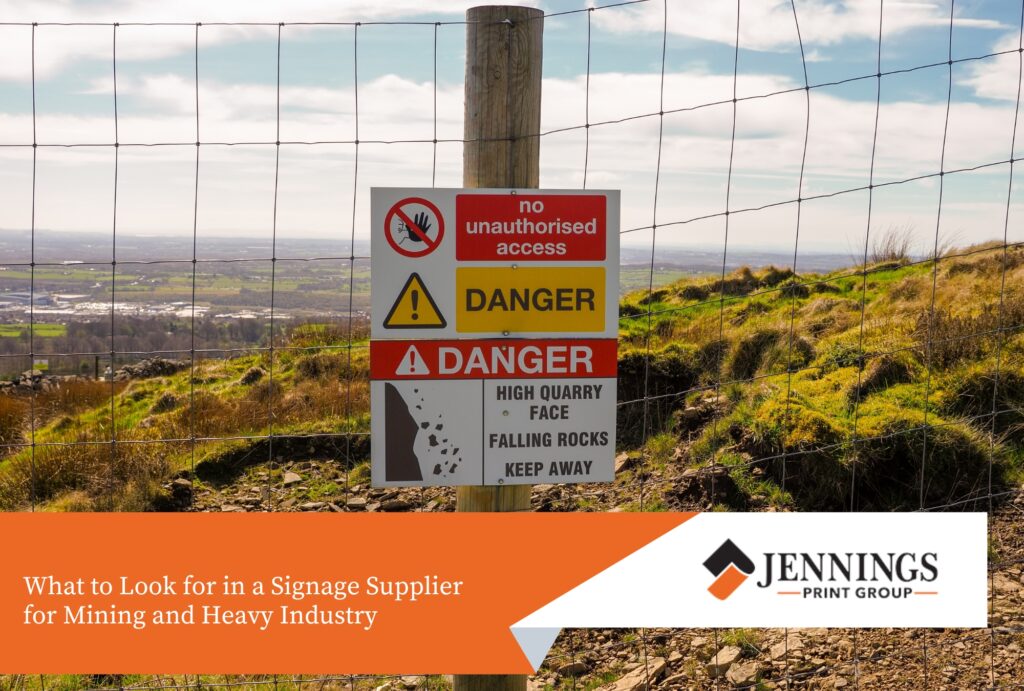
What to Look for in a Signage Supplier for Mining and Heavy Industry
If you’re sourcing signage for a mine site or heavy industry operation, a few questions are worth asking before you commit to a supplier:
- What substrate and ink combination are they recommending, and is it rated for the specific exposure conditions at your site (UV, dust, chemical, temperature)?
- Can they produce site-specific signage rather than only stocking generic templates?
- Do they understand the relevant Australian Standards for your hazard categories?
- Can they advise on mounting hardware suited to your site conditions, not just supply the printed sign itself?
- What’s their expected lifespan for the signage under your specific conditions, and is that backed by a warranty or guarantee?
A supplier who can answer these clearly, rather than defaulting to a generic product line, is more likely to deliver signage that actually performs on site rather than needing replacement within a year or two.
Getting Signage Right for Your Site
Mining and heavy industry sites are genuinely demanding environments, and the signage on them needs to reflect that. The cost difference between a generic sign and a properly specified, fit-for-purpose sign is often modest compared to the cost of replacing failed signage repeatedly, or worse, having signage fail to communicate a hazard when it matters.
Jennings Print works with heavy industry and mining sector clients to produce custom safety signage built for the actual conditions it will face, not a generic standard. If you’re specifying signage for a remote, harsh, or chemically demanding site, it’s worth talking through your specific exposure conditions before ordering. Visit our Safety Signs range to see what’s available or get in touch with the team to discuss site-specific requirements for your operation.